The Invisible Architecture of Speed.
5G is not merely an upgrade; it is a fundamental reimagining of how data moves through space. In Qatar, we have deployed a network that operates less like a utility and more like a nervous system—sensing, reacting, and transmitting at the speed of thought.
This page details the engineering standards, the physical hardware, and the intelligent software layers that make the Qatar5G network a national asset. No marketing fluff. Just the signal.

Hardware That Defies Physics
The Qatar5G network relies on a dense grid of Massive MIMO (Multiple Input Multiple Output) antenna arrays. Unlike traditional 4G towers that broadcast wide, unfocused beams, our beamforming technology directs signal energy directly to your device. It is the difference between shouting in a crowded room and speaking directly into an ear.
These antennas utilize mid-band and mmWave spectrums, requiring a higher density of small cells mounted on street furniture and rooftops. The result is a signal fabric that wraps the city, capable of handling 100x the connection density of legacy networks.
- Massive MIMO: 64x64 antenna arrays for pinpoint precision.
- Beamforming: Signal focused on the user, not the horizon.
- mmWave: Multi-gigabit speeds in high-density areas.
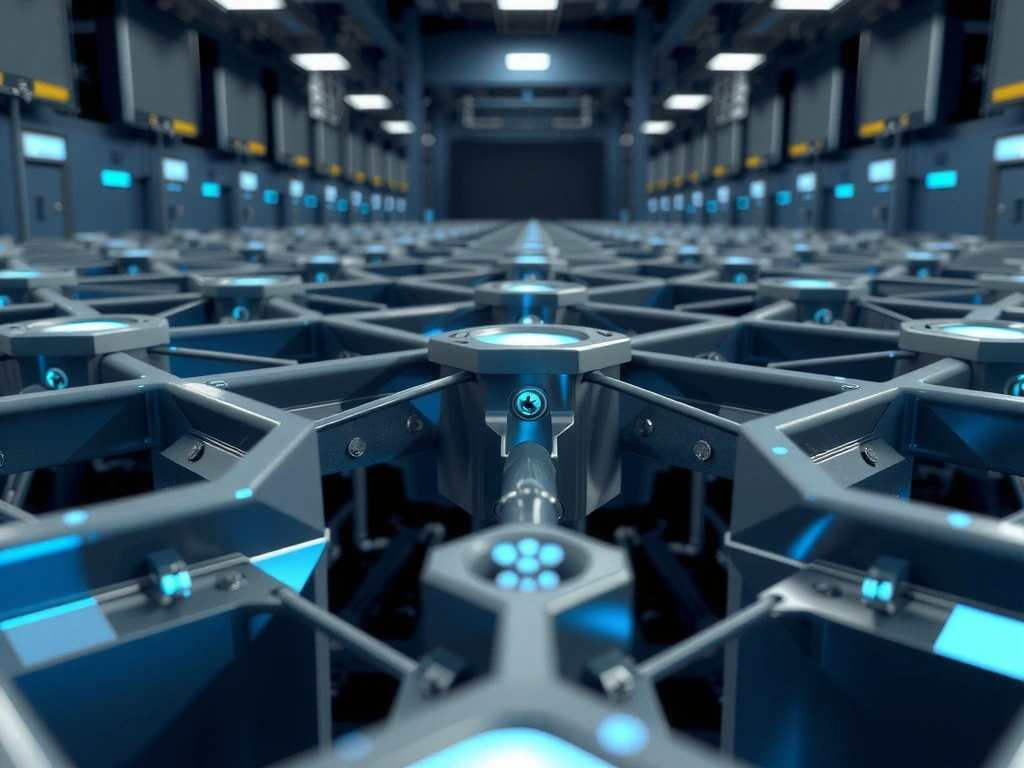
Physical Layer
High-gain panel antennas with dynamic tilt adjustment for optimal signal propagation across Doha's skyline.

Intelligence in the Edge
Speed is nothing without low latency. Traditional networks route traffic through centralized core data centers, often hundreds of kilometers away. Qatar5G utilizes Multi-access Edge Computing (MEC). This means the processing power lives right here in Doha, close to the user.
By decoupling the radio from the core, we create a software-defined network that reconfigures itself in milliseconds. It predicts congestion before it happens and routes data along the path of least resistance. It is the digital reflex system of the smart city.
The Impact
Cloud gaming, industrial robotics, and AR/VR applications become possible because the round-trip delay is measured in single-digit milliseconds, not hundreds.
The Qatar5G Engineering Standard
Rigorous testing. Sovereign security. Future-proof architecture.
Assumptions
- • Coverage requires density, not just power.
- • Latency is the new bandwidth.
- • Security is zero-trust by default.
Constraints
- • Desert heat dissipation limits.
- • Fiber backhaul redundancy requirements.
- • National regulatory compliance (CRA).
Paradigm Shift
If we viewed the network as a utility rather than a service, we would prioritize resilience over raw peak speeds. This changes hardware selection and topology.
Our engineering protocol rejects the "spray and pray" model of coverage. Every antenna placement is simulated against 3D city models and verified with drive-testing. We treat interference not as noise, but as a mathematical problem to be solved by adaptive resource allocation algorithms.
The network is designed for redundancy. Every node has multiple fiber paths. Every core function is virtualized and mirrored. This is not just an internet connection; it is critical infrastructure.
Engineered for the Desert, Built for the Future
Qatar's environment is extreme. High temperatures, sand, and rapid urban development require hardware that is ruggedized and software that is adaptable. Our equipment is IP67 rated and cooled passively to eliminate failure points.
More importantly, the architecture is modular. As technology evolves—perhaps toward 6G or satellite integration—our core network can absorb these shifts without a complete overhaul. We are building for decades, not quarters.
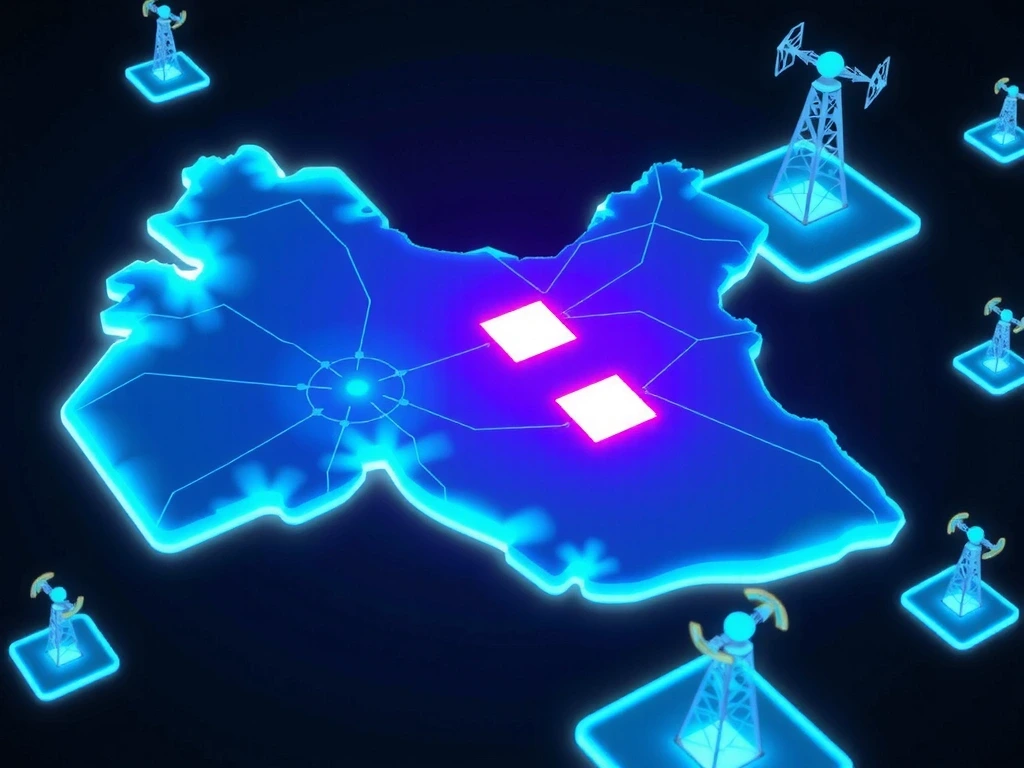
Signal Density Analysis
Projected capacity overlay based on current urban expansion patterns.
Ready to see where the signal reaches?
Explore the coverage map and detailed plan specifications.
Go to Coverage & Plans